

Adults and children can develop diabetes. Diabetes is a condition where blood glucose levels are too high, and there are two main types.
Type 1 diabetes is a condition that develops quickly and often starts in childhood. If your child has type 1 diabetes, their body does not produce any insulin, and therefore, your child will need to take insulin every day to help balance their glucose levels. There is no cure for type 1 diabetes, but it can be managed safely by:
If your child is diagnosed with type 1 diabetes, your family will be supported by a specialist child diabetes team. A diabetes nurse will show you how to manage your child's diabetes. They will also help you adapt their treatment as they grow older.
Type 2 diabetes develops slowly and is most common in adults. If your child has type 2 diabetes, their body does not make enough insulin or cannot use the insulin they do produce well enough (insulin resistance).
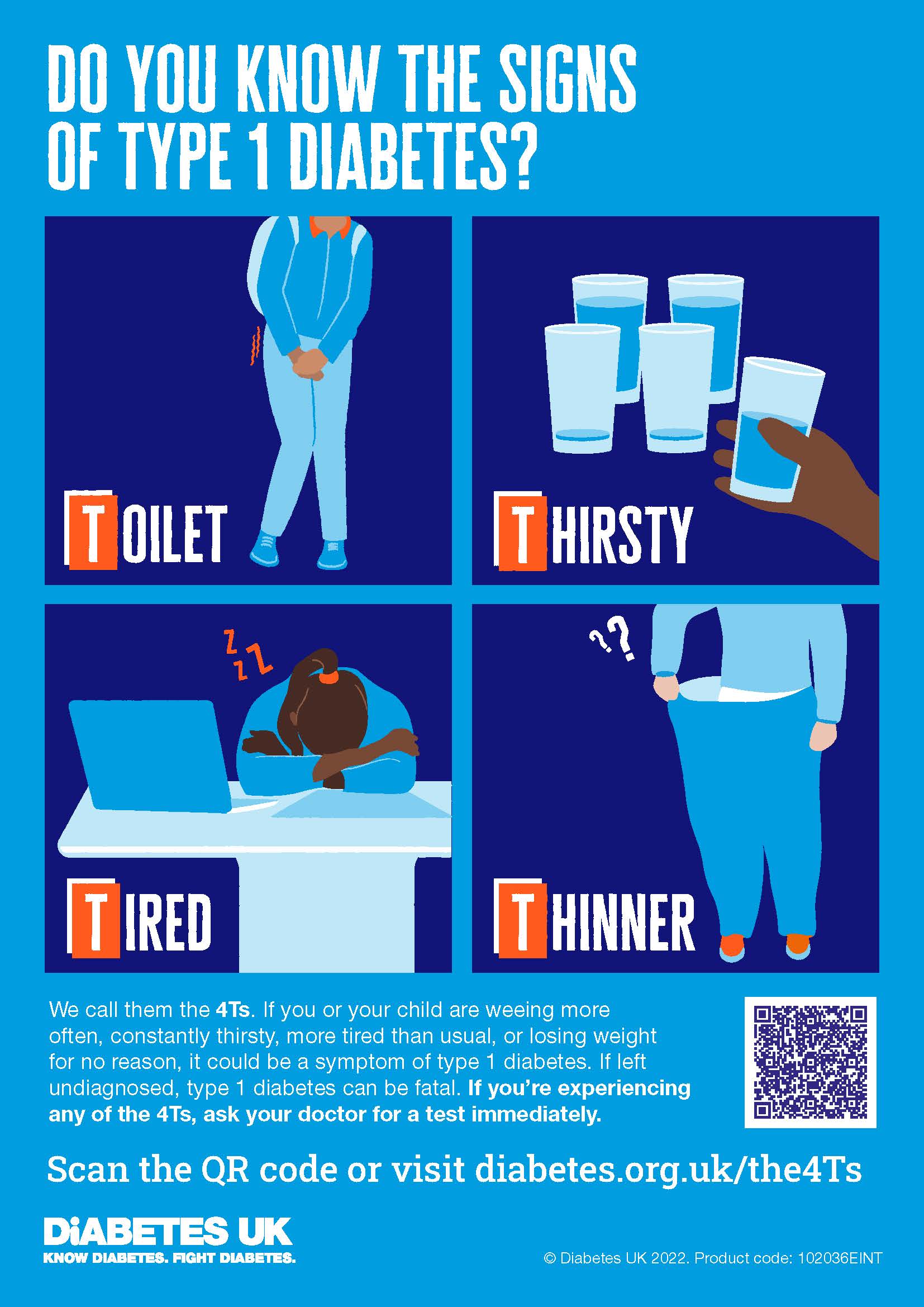 Type 1 Diabetes can develop at any age, but the most common symptoms in children are:
These symptoms can be remembered as the 4 T's: Toilet, Thirsty, Tired and Thinner.
In type 1 diabetes, these symptoms can happen very quickly, in days or weeks. If you notice any of these symptoms, it is important to get urgent medical attention by:
Find out more about type 1 diabetes in children
Type 2 diabetes can happen much more slowly, with some children not noticing any symptoms. If your child does start to experience any of the symptoms, then it's important to talk to your child's GP.
Injecting or using insulin technology like a pump or pen is the main form of treatment for type 1 diabetes. Your child's body doesn't make insulin like it normally would, and they can't live without it, so it needs to be added back into the body.
It can be very confusing to understand what type and when insulin needs to be injected because it relates to the food and meals that your child will eat throughout the day.
Being diagnosed with type 1 diabetes doesn't mean that your child has to drastically change their diet, although a healthy, balanced diet is always recommended. But it does mean that you and your child will need to monitor what they eat each day.
When your child is diagnosed, you will be supported by a specialist diabetes team who will be able to teach you when you need to inject insulin, and offer advice on different technologies that can be used to make this easier.
Diabetes can be confusing and frightening for children and teens, for example:
Having type 1 diabetes can be lonely, so it can be helpful to give your child the chance to talk about their feelings. Older children and teens may find it difficult to talk about their diabetes. They may prefer to speak to their friends instead, or express their feelings in other ways, like a journal.
Changes
Your child may not need to make major changes to their diet. But it can be difficult to get used to a new routine of testing your child's blood sugar levels. You will need to test their blood, react to their levels and give the correct dose of insulin.
Your child's blood sugar levels will change throughout the day. They can be affected by various changes, for example:
Find out more about checking your child's blood sugar levels and giving insulin:
Parents guide to Type 1 diabetes
Technology
If your child has type 1 diabetes, they will need to take insulin as part of their treatment. This may be given to them through an insulin pen or pump. You will be given support to learn how to use these medicines. Then, as your child gets older, they can be taught how to use these themselves.
Find out more about injecting insulin
Different types of technology can be used to monitor your child's glucose levels and, in some cases, to give them the correct doses of insulin.
It can be worrying when your child has diabetes and their blood sugar levels need to be managed throughout the school day. All schools have basic procedures to follow to support students with medical conditions such as diabetes.
To help you feel more comfortable, you can:
Type 2 diabetes is less common in children and develops more slowly. It is a serious condition, so it's important to watch out for:
These symptoms can be remembered as the 4 T's: Toilet, Thirsty, Tired and Thinner.
Your child may also have additional symptoms, like genital itching, thrush, blurred vision or their cuts and wounds taking a long time to heal.
Type 2 diabetes cannot be cured, but some people can go into remission. Remission means a person's blood sugar can return to a healthy level for a period of time without the need for glucose-lowering medication. Type 2 diabetes can be supported with medication, and sometimes through changes in diet and lifestyle.
You can contact the Healthy Child Service team by calling Just One Number on 0300 300 0123 or texting Parentline on 07520 631 590. Our opening hours are Monday to Friday, 9am to 5pm (excluding bank holidays).
If your child is 11-24 years old, FYI Norfolk is an interactive NHS website just for them. It provides reliable and trustworthy advice and support on lots of health and wellbeing topics.
You can find helpful information about managing diabetes and advice about the physical and emotional impact through Diabetes UK.
For local advice and support you can find information at Diabetes Norfolk.