
Loading

Staying Safe Outside

Road Safety - Older Children

Road safety needs change as children get older and become more independent.

Older children put into action the skills they have been taught and start making more of their own choices when travelling independently. Their risk of injury can increase as they gain independence and are influenced by friends.

Download Tales of the Road - a highway code for young road users

Key Messages for Young People

You can help your child make confident decisions when they are walking near roads by encouraging them to learn these simple messages:

  • Stay alert - distractions like phones, music and chatting with friends can reduce awareness of danger. It is important to stay focused near roads.
  • Be seen - wearing bright or reflective clothing helps drivers notice you near roads.
  • Speak up - if something feels unsafe, trust your instincts and say something.
  • Support others - help friends make safe choices.
  • Share the space - be aware of others walking, cycling or scooting and give them room.
  • Cross safely - use crossings where possible and take time to check for traffic.
  • Know the rules - understanding the Highway Code and how to safely share the road with other users can help your child stay safe and will prepare them for driving.

Find out more about the Highway Code

  • Make safe choices: pressure from friends may lead to risky behaviour or choices. Think ahead and make choices that will keep you and others safe.

Safety tips for running and walking


Dive Deeper

Allowing Your Child to Walk to School on Their Own

When deciding if your child is old enough to walk on their own consider:

  • How old is your child? Most children can’t reliably judge the speed or distance of traffic until around age 9. Independent walking is something to consider from around age 8, depending on your child’s confidence and experience.
  • How far away is it?
  • Is the pavement in good condition?
  • Is there a busy road they need to cross?
  • Are there safe places to cross?
  • Are there street lights?
  • Have they got appropriate clothing for the weather and visibility?

When your child begins going out independently, remind them to:

  • Follow the Green Cross Code - Stop, Look, Listen, Think.

Top Tips for Walking Safely Near Roads


  • Never assume a driver will stop for you at a pedestrian crossing, wait for them to stop.
  • If walking where there isn’t a pavement (i.e. country road) walk on the right hand side of the road facing oncoming traffic and wear something bright or reflective to make yourself seen.
  • Avoid walking next to the kerb with your back to the traffic.
  • Look out for motorcycles and bicycles travelling between lanes of traffic.
  • When crossing the road make sure you can get to the pavement without having to walk around obstacles i.e. parked cars, road works, skips etc.
  • When crossing at any pedestrian crossing keep looking, it’s not uncommon for drivers to go through red lights.
  • When walking with younger children, keep them on the side of the path furthest away from the traffic.
  • Be aware of the distraction caused by headphones or texting when walking.
  • Keep talking about road safety with your child, especially about putting away their phone and taking out their earphones!
  • By teaching your child to know different road signs and their meanings, this will help them later when they learn to drive.

Passenger Safety When Travelling With Drivers

Even as a passenger, you play an important role in keeping everyone safe when travelling.

  • Always wear a seatbelt. Make it a habit for every journey. It’s the law and it saves lives.
  • Speak up if you feel the driver is distracted, speeding, or driving dangerously.
  • Avoid pressuring the driver to take risks. It is their legal and moral responsibility to get everyone travelling in their car to their destination safely.
  • Respect a driver’s need to concentrate - loud conversations, music and distractions can impact on the focus of the person who is driving.

Staying Safe Around Buses

Whether you're waiting, boarding, or walking near buses, it is important to be alert. 

When waiting at a bus stop:

  • Stand back from the edge and be alert to what's happening around you.
  • Be considerate of other people trying to walk by a bus stop so they don’t have to step into the road to pass you.

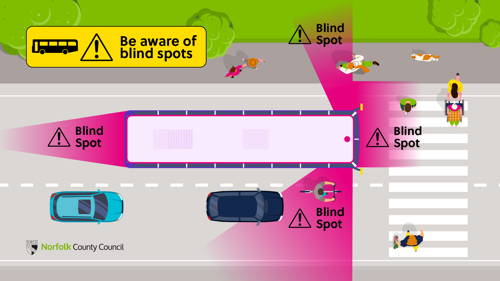
Blind spots

  • Buses and large vehicles have blind spots. These are areas where drivers may not be able to see you.
  • Wait for buses to move off before trying to cross around a bus of large vehicle.
  • Ensure you have a clear view of the whole road before crossing.

E-Scooter Safety


If your child has an e-scooter, it is important that you understand the rules about where they can use it. 

It is illegal for them to use an e-scooter on roads, pavements or in public spaces. They can only be used on private land, with the landowner's permission.

Rental E-Scooters

  • You must be 16 or older and hold a provisional driving licence.
  • You must meet the minimum age limit (this can vary depending on the rental company, so please check with them). For example, Beryl is 18. Read more about staying safe on a Beryl e-scooter.
  • Legal to use through approved trial schemes like Beryl in Norwich.
  • Always follow the rules of the road, rental e-scooters must not be used on pavements.
  • Consider wearing a helmet, it can protect you in a fall.

E-scooter advice Norfolk Constabulary

Modelling Safe Driving 

Children notice everything - your driving habits shape how they understand road safety. By modelling safe habits and showing respect to all road users, we help children build lifelong safety awareness.

Join other families in making safer travel choices on the school run. Every small action helps build a safer Norfolk for children and communities.

Your driving habits matter:

  • Set up your GPS before you drive
  • Put your phone away
  • Buckle up every time
  • Stick to speed limits - and slow down in poor road or whether conditions
  • Give space to people walking and cycling
  • Talk about why safe choices matter - build empathy and compassion
  • Respect people walking and cycling by giving them space 

Highway Code changes

  • Road user hierarchy - who comes first? Talk to your child about who’s most vulnerable on the road


Who Can Help?

You can contact the Healthy Child Service team by calling Just One Number on 0300 300 0123 or texting Parentline on 07520 631 590. Our opening hours are Monday to Friday, 9am to 5pm (excluding bank holidays).

Log In / Create An Account

Forgot password?

This site is protected by reCAPTCHA and the Google Privacy Policy and Terms of Service apply.

This site is protected by reCAPTCHA and the Google Privacy Policy and Terms of Service apply.

Was This Page Helpful

Latest From Social Media